Gnomes! Avoiding the Homeowner
Treat the Homeowner as the primary fail condition in Gnomes! [Steal & Escape]—survive the pressure, then bank the loot.
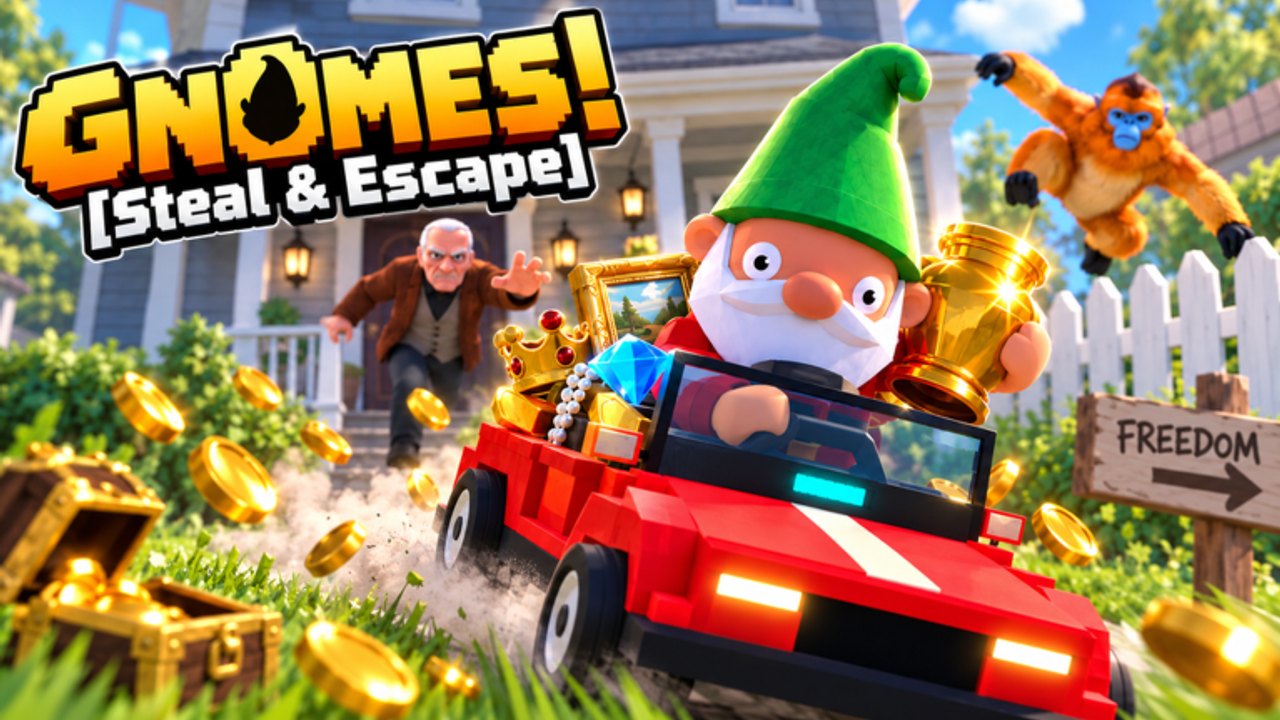
In Gnomes! [Steal & Escape], the Homeowner is not flavor text. Catching you is the fail state that makes stealing meaningful. You sneak into a house as a gnome, grab loot, and escape before that threat ends the run—solo or with other gnomes—while unlocking tools, upgrades, and quests. This page focuses on awareness habits, pressure spikes, greed versus survival, co-op watch roles, and recovery after a near-catch. It is written for the Sneaky Gnomes Roblox place 103331563595376 only.
Honesty up front: the game has been in active / early development since roughly 22 August 2026. Detection feel, chase timing, audio cues, and map pressure can change between patches. Treat the habits below as durable player skills, not a datamined AI spreadsheet. When something suddenly feels different, check Updates before you invent conspiracy theories about “broken stealth.”
Primary fail condition mindset
Every other system—Coins, quests, tools, co-op—assumes you still have a gnome to play. A full inventory that dies on the carpet is still a loss. Adopt this policy:
- Information before loot. If you do not know where pressure is, you are gambling.
- Survival before greed. Extra containers after a spike are optional; extract is not.
- Leave conditions are real. Pre-set them; obey them. Details live in How to Escape.
The Homeowner is the clock and the judge. Respect both.
Awareness habits (no fake AI numbers)
We will not invent detection radii, exact chase speeds, or hidden meter values that may not match the live build. You do not need those numbers to play well. You need a loop:
Hear before you argue
Sudden audio changes, chase-style stingers, and teammate panic are hard data. Many wipes start with someone saying “it’s fine” over a clear warning. When attention shifts toward the gnomes, shrink your footprint: fewer open doors, fewer stacked bodies, faster path to the exit.
See the expensive spaces
Wide kitchens, stair landings, long halls, and doorway clusters are where sneaky plans fail. Cross them with purpose. Do not afk-loot in the middle of a sightline because a cupboard “looks worth it.” Peek, commit, leave.
Break inventory tunnel vision
Staring at what you might take is the most common way to miss what can take you. In co-op, assign a watcher during spikes. Solo, deliberately swap between loot mode and watch mode instead of looting through an alarm state. More spacing and role notes: Stealth Tips and Co-op Heists.
Build map memory
After each catch, name the room that killed you. After each success, name the route that felt safe. Layouts teach patterns even while early-dev changes continue. Memory is a free awareness tool.
Pressure spikes: what to do when the house wakes up
A pressure spike is any moment when the Homeowner presence clearly rises—audio, visible pursuit, repeated near-misses, or squad-wide panic. Your default response should be pathing toward escape, not doubling down on a side bedroom.
Healthy spike responses:
- Caller (or you, solo) announces leave
- Looting stops unless an object sits on the extract path
- The team staggers instead of parading
- Optional quest steps wait for a fresher heist—see Quests
Unhealthy spike responses:
- Opening a new wing “real quick”
- Debating loot value in a doorway
- Sending the whole squad to “help” one greedy gnome
- Pretending the spike was a false alarm without evidence
Pressure is information. Spending it on ego is how groups donate runs.
Greed versus survival
Greed is not taking loot. Greed is taking loot after survival said stop.
Healthy greed: finishing a container on the route you already committed to; waiting two seconds for a teammate already moving; grabbing value that does not add a new risky crossing.
Unhealthy greed: crossing the most exposed space on the map for one more pickup; ignoring the first hard spike because pockets “look empty” on a new account; forcing a quest detour through a hot zone.
Beginners should practice intentional early extracts. Leave with less on purpose for several runs. You are training the muscle that prints long-term Coins. Failed max-loot heroics mostly teach you the catch animation. First-hour framing sits in Getting Started.
Co-op watch roles against the Homeowner
Online co-op is a strength and a liability. More looters clear faster; more bodies also make detection cheaper if everyone stacks.
- Watcher: eyes and ears on pressure; minimal looting during spikes
- Caller: owns the leave decision; argue in the lobby, not the hallway
- Looters: strip value quickly in safer pockets
- Trailer: last through doors; keeps the group from stranding a gnome into a rescue wipe
Rotate the watch role. One friend staring at empty halls all night will eventually stop watching. Full team-play structure: Co-op Heists.
Recovery after a near-catch
A near-catch is a gift if you treat it as a warning shot.
- Stop looting immediately unless the item is on your exit path.
- Re-orient to extract—do not “finish the room” that almost ended you.
- Call the near-miss so teammates do not walk into the same angle.
- Change one variable: different door order, staggered timing, earlier leave, or a watcher swap.
- Debrief in one minute after extract or wipe—missed signal, stack, greed, or no exit plan?
Do not spend the recovery window explaining why the near-catch “doesn’t count.” It counted. You got a free lesson; cash it out by leaving.
If you wiped anyway, change one habit next run instead of blaming luck. Improving players adjust pathing, greed, or calls. New players change nothing and queue again.
Tools, upgrades, and codes (practical, not invented)
Spend Coins on whatever clearly helps you avoid detection, break contact, or secure extraction. Exact tool names belong to the live UI; we will not invent them. After a few sessions, compare priority thinking on the Tier List Hub.
Bankroll helper: redeem RELEASE! for 125 Coins on the Codes Hub using How to Redeem Codes. Free Coins buy the same progression hooks as heist Coins. Skipping redemption while complaining about catches is optional suffering.
Early-dev honesty
Detection rules, Homeowner aggression, and map flow may shift while Sneaky Gnomes iterates. Approximate community mirrors sometimes cite large visit counts and tens of thousands of favorites; popularity does not freeze mechanics. Re-read this page’s habits after major patches, and confirm you are still in place 103331563595376 via the Links Hub—not a similarly named gnome burglary experience.
Related pages
- How to Escape — leave conditions when pressure spikes
- Stealth Tips — spacing, failure modes, awareness loop
- Co-op Heists — roles that keep a watcher on the Homeowner
- Getting Started — first-hour survival before greed
- Quests — abort objectives that demand hot-zone linger
- Guides Hub — full walkthrough list
- Updates — patch-oriented notes when feel changes
Steal bravely. Watch actively. When the Homeowner wakes up, choose survival on purpose—then come back richer on the next heist.
Frequently Asked Questions
Quick answers for heists, codes, and upgrades.
What is the Homeowner in Gnomes!?
The primary fail condition: get caught and the heist ends. Treat pressure spikes as leave signals—see How to Escape and the habits on this page.
Do you list exact detection ranges or AI stats?
No. The game is early-dev and numbers may change. Use awareness habits, spacing, and extract discipline instead of invented meters. Patch notes: Updates.
What should I do after a near-catch?
Stop optional looting, path to extract, tell teammates, and change one variable next run. Pair with Stealth Tips.
How does co-op help against the Homeowner?
Assign a watcher and a caller so someone reads pressure while others loot. Role details are in Co-op Heists.
Can codes help me survive more often?
Indirectly. `RELEASE!` grants 125 Coins for tools and upgrades that may reduce catches—redeem via Codes and compare priorities on the Tier List Hub.